
Una noche histórica con intención: el episodio 1,000 de SNL se convirtió en un momento « marca país» para la diáspora dominicana al ver a Cardi B y El Prodigio en escena.
JetBlue Launches “DR: Pride That Soars” and Opens Voting to Choose the Design of Its First Plane Dedicated to the Dominican Republic
ArtCommentJetBlue lanza «RD: Orgullo que Eleva» y abre votación para elegir diseño de su primer avión dedicado a República Dominicana
arteCommentMarcello Hernández: comedia con raíces dominicanas
arte, comediaCommentRemembering the Legacy of Ada Balcácer, Master of Dominican Art and Architect of a Distinct Caribbean Visual Language
ArtCommentFallece en Miami Ada Balcácer, maestra del arte dominicano y arquitecta de un lenguaje caribeño propio
arteCommentFirelei Báez rompe récord en subasta: primera dominicana en superar el millón de dólares
arteComment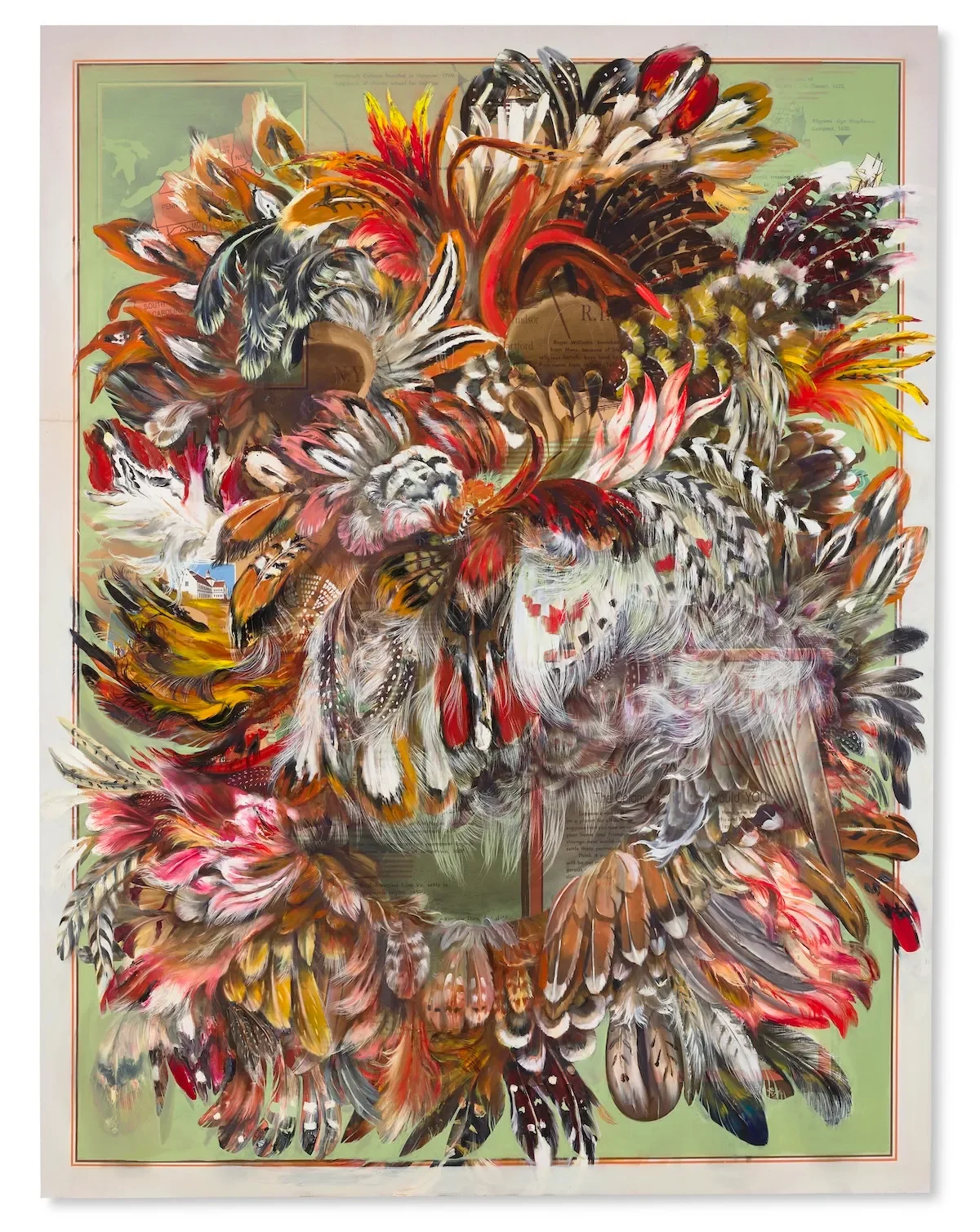
Foto: Christie’s
Por ESENDOM
20 de noviembre de 2025
La artista dominicana Firelei Báez alcanzó esta semana un hito histórico al venderse una de sus obras por más de un millón de dólares en subasta internacional. La pieza Untitled (Colonization in America, Visual History Wall Map, Prepared by Civic Education Service) (2021) fue adjudicada en las ventas de noviembre en Nueva York por alrededor de $1.1 millones, pulverizando el estimado inicial de $150,000–200,000 y estableciendo su nuevo récord. Minutos después, otra pieza de la velada —Pueblo H (2011) de Olga de Amaral— también rompió récord en esa misma subasta, confirmando que fue una noche de marcas históricas en Christie’s.
La obra de Báez se vendió por más de US$1.1 millones, más de cinco veces por encima del estimado previo, fijando récord para la artista.
El resultado marca la primera vez que un creador nacido en República Dominicana supera el millón de dólares en una casa de subastas de primer nivel, según el reporte de mercado citado.
La pieza pertenece a su serie de mapas coloniales intervenidos, donde reimagina archivos históricos del Caribe desde una visión de resistencia e identidad.
El récord ocurrió en una semana sólida para el arte contemporáneo en Nueva York, con ventas competitivas y estimados conservadores que empujaron precios al alza.
La obra es una explosión de color, plumas y cartografías históricas alteradas. Báez toma mapas antiguos —documentos diseñados para ordenar el mundo desde la mirada imperial— y los cubre con capas de pintura que evocan cabello, tejidos, flora caribeña y símbolos rituales. En su lenguaje visual, la historia no es archivo muerto sino terreno vivo donde se disputa quién cuenta, quién pertenece y quién queda fuera.
Más allá del logro individual, la venta coloca a República Dominicana en un circuito que pocas veces mira hacia el Caribe hispano. En un momento en que el país exporta música, deporte y cultura popular con fuerza, este récord abre otra puerta: el arte contemporáneo dominicano como conversación global. Y no es casual que ocurra en Nueva York, donde la dominicanidad construyó una segunda casa. Aunque la comunidad se mueve a otros estados, figuras como Báez demuestran que la creatividad dominicana sigue ganando escala en los grandes centros culturales.
El salto desde un estimado modesto hasta siete dígitos confirma lo que curadores y críticos observan: hay demanda creciente por narrativas afrocaribeñas, por obras que cuestionan el colonialismo y por artistas capaces de convertir memoria histórica en imagen contemporánea. Báez, con su mezcla de archivo, cuerpo y exuberancia caribeña, está en el centro de ese movimiento.
Quién es Firelei Báez
Nacida en Santiago de los Caballeros en 1981, hija de madre dominicana y padre de ascendencia haitiana, Báez creció en Dajabón, ciudad fronteriza donde conviven las tensiones históricas de la Hispaniola dividida. Esa infancia entre dos países marcó su sensibilidad artística hacia la identidad, el desplazamiento y las narrativas borradas.
A los ocho años emigró con su familia a Miami. En 2001 se mudó a Nueva York, donde obtuvo su BFA en Cooper Union (2004) y su MFA en Hunter College (2010). También estudió en la prestigiosa Skowhegan School of Painting and Sculpture.
Su obra —que abarca pintura, dibujo, escultura e instalación— explora las historias silenciadas del Caribe afrodescendiente. Báez interviene mapas coloniales, documentos históricos y archivos con una estética vibrante que mezcla folklore dominicano (como las ciguapas), iconografía del movimiento Black Panther, taxonomías del siglo XVIII y ciencia ficción. Sus figuras femeninas poderosas miran directamente al espectador, afirmando agencias e identidades en constante transformación.
Ha recibido numerosos premios, incluyendo el Joan Mitchell Foundation Award (2010), el Catherine Doctorow Prize (2015), el Artes Mundi Prize (2021) y el Cooper Union President's Citation (2022).
Sus exposiciones individuales incluyen presentaciones en el Pérez Art Museum Miami (2015), el Studio Museum in Harlem y Schomburg Center (2018), MoMA (2018-2019), ICA Watershed Boston (2021), Louisiana Museum of Modern Art (2023) y su primer gran estudio estadounidense en el ICA Boston (2024). Participó en la Bienal de Venecia en 2017 y 2022 (donde formó parte de "The Milk of Dreams"), y en la Bienal de Berlín (2018).
Ha realizado comisiones públicas para el High Line y el sistema de metro de Nueva York. Su trabajo forma parte de colecciones permanentes del Guggenheim, San Francisco Museum of Modern Art, Crystal Bridges Museum y Pérez Art Museum Miami, entre otros.
Desde 2023 está representada globalmente por Hauser & Wirth, una de las galerías más importantes del mundo.
Relacionado
⸻⸻
Firelei Báez in The Brooklyn Rail
«Especias Familiares» con Julisa Marie Mugica, artista dominico cubana
José Cestero: El alma expresionista de la plástica dominicana
Peña Gómez y Ñico Lora cobran vida en Mao: murales que pintan memoria, identidad y futuro
Peña Gómez y Ñico Lora cobran vida en Mao: murales que pintan memoria, identidad y futuro
arteCommentLos Premios HOLA 2025 galardonaron la obra Domino Effect con una de sus cuatro nominaciones
Teatro, arteCommentAnotaciones de un viaje
arteCommentJosé Cestero: The Expressionist Soul of Dominican Visual Art
ArtCommentJosé Cestero: El alma expresionista de la plástica dominicana
arteCommentInterview of Marco Antonio Rodríguez and Mino Lora about Domino Effect
Art, TheatreCommentThe play Domino Effect is a capicua written by Marco Antonio Rodríguez
Art, TheatreCommentJosé Lévy: A Jewish Social Artist in the Caribbean
ArtCommentMarco Antonio Rodríguez Flourishes Again with New Play Titled ‘Bloom’
ArtComment‘Bloom’ Made Its Debuted at the IATI
By Emmanuel Espinal
April 15, 2022
This article was originally published in Spanish and was translated by the author
Now that the theatre lights have been turned back on, after a pandemic that paralyzed the theatrical arts, Marco Antonio Rodríguez flourishes once again with a new theatrical play titled Bloom. Bloom is a contemporary play that looks to make the audience emotionally and intellectually uneasy with its themes. He generously allowed us to interview him with regard to his new English-language play, which made its debut on Saturday, April 16th, at the IATI Theatre. Bloom stars Dominican actor Rafael Beato and the international actress Monica Steuer. Following is the interview with Marco Antonio Rodríguez on the play and many other topics:
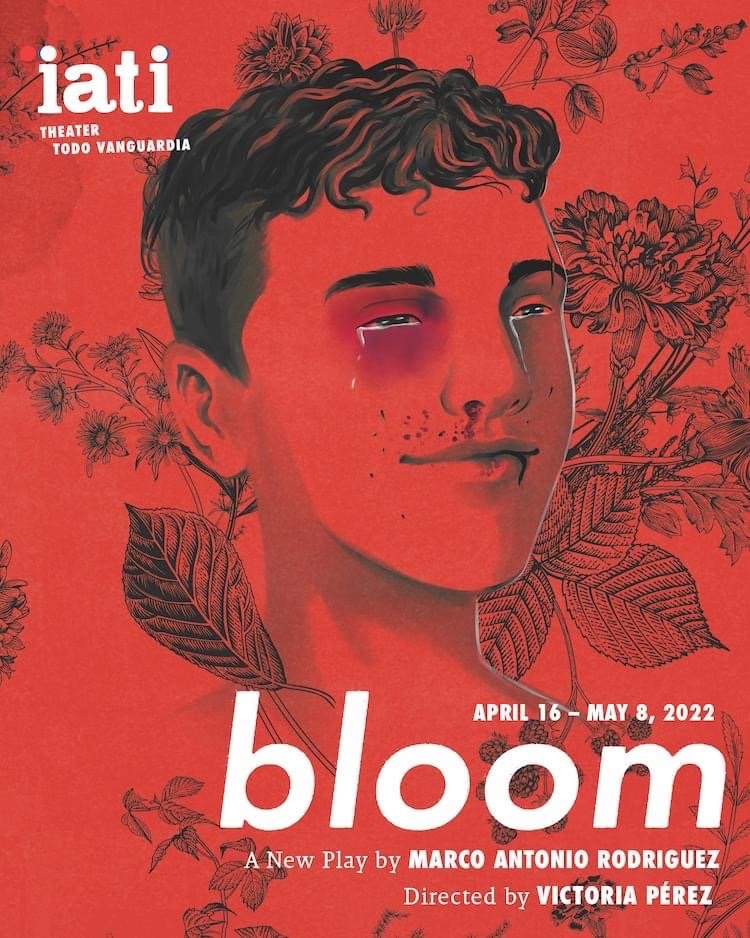
Poster of the play Bloom
The pandemic has changed many things in our daily lives. How did the pandemic affect your creative process as a writer and playwright? Did it inspire a project or did it affect you to the point of stopping completely your creative process?
In reality, the pandemic did not affect my creative process. I was working on my second Master’s degree (MFA in writing for television and cinematography) so I had to keep writing screenplays non-stop. My studies were a good distraction. Writing is a solitary process, in it of itself, so it was not a shock to me when the pandemic emerged. What it did affect was my work as a theatrical playwright as all live events were halted; there was no theater for a very long time.
In October, PBS started transmitting Alma’s Way, in which through your voice you give life to Tío Nestor. How did this opportunity come about and how does it feel to reach a children’s audience?
This was one of the biggest blessings at the start of the pandemic. My agent contacted me for the audition in February of 2020. As soon as I read the script I realized that this character was very similar to me. He loves theater as well as having fun with his family. Everything fit perfectly. They showed me a sketch of the character and he physically also looked like me. It is a true honor and a commitment to reach a children’s audience especially at the crucial ages between four and six during which there is a lot of growth and development. The love of children is pure and unconditional. Alma’s Way is the authentic representation of a Caribbean family living in the United States. It also represents the diversity of our great city, showing families from India, China and other countries.
In our last interview, we asked if there was a possibility that Bloom could be exhibited as you had just finished a first reading of the play. Now in April it will be showcased at the IATI Theatre. How has that process been? How does it feel to achieve that goal and have several of your plays running at the same time?
In 2019, Bloom participated in a program at the IATI called CIMIENTOS*, which provides space and time for playwrights to be able to develop their play. In that program I was given time to focus on the story. I received feedback and ideas from colleagues that helped a great deal. From there, IATI expressed interest in producing the play as it goes well with their mission of provoking introspection through avant-garde performing arts. IATI supports multicultural communities that are diverse and neglected while harnessing and empowering unique voices. IATI produces plays that highlight the complexities, the contradictions, the profoundness and richness of the experiences between many Latino cultures, with themes that are culturally relevant, political, defiant and entertaining.
* Literal translation and meaning of cimientos in English is foundations.
“IATI produces plays that highlight the complexities, the contradictions, the profoundness and richness of the experiences between many Latino cultures, with themes that are culturally relevant, political, defiant and entertaining.”
Please describe for us a bit of what the play is about and the actors that dramatize it. What contemporary themes does it touch upon? How was the casting and what you were looking for in each character?
Synopsis: For years the government has sought to eradicate those who love in the way that Roan does. After being taken, imprisoned, and tortured, he is now returned home to his mother, Julia. But the sentence is clear: she has but one hour to end her son’s life or face the consequences for her and her entire family.
I started working on Bloom approximately a year before Donald Trump was elected president, inspired by the horrible things I read were happening to the LGBTQ+ in Chechenia, a Russian territory. It was impactful that so many (including myself) did not know anything about this. Once the Trump administration took over, it really started to fuel the story once I saw the toxic division that surged and revealed itself in our own country and especially within my own family. It was then that the story started to manifest itself more clearly.
The persistent division, intolerance, the hate, xenophobia, fanaticism, the ignorance and the massive distance that we have ALL created, taking us further apart from LOVE is a global pandemic. As US-Americans, we often do not include ourselves as part of that, we quickly label ourselves as a ‘democracy’, looking at other countries as the guilty ones. Everything becomes ‘THAT’ or ‘THEM’, without realizing how close we have been and are to becoming the same thing we criticize.
In the play, I never say the country it is taking place in and I never use the word totalitarian. I chose NOT to make it a specific place like the United States, the Middle East, Russia, China or any other. I do this on purpose so that there is no opportunity of removing or evading our own responsibility, none of ‘THAT’ or ‘THEM’ or ‘Well, that is happening THERE not here’.
Winston Estévez, artistic director of IATI says:
The spread of misinformation and the attack of groups that are under represented in the US political landscape, reflects how totalitarianism and fanaticism separates families as well as being conducive to an unjust and unnecessary human suffering. Current events such as the widespread controversy surrounding transgender youth or the war in Ukraine are a reflection that we are all at risk to suffer. Marco Antonio brought the themes of totalitarianism and discrimination of LGBTQ+ to an extremely universal story of mother and son. At the center of the play is the powerful evolution that both characters live through in their last hour together.
As I am not directing this production, I will pass along the question of casting to our director, Victoria Pérez:
We were very fortunate that the first phase of casting was via Zoom and we received many “self-tapes” also. I was looking for an actor that could convey the character’s fortitude but at the same time his sensibilities and the horror of the situation. This play only has two characters. The actress that interprets the role of the mother had already done the role in one of the readings and it was very important that she continue in the project because as an actress, she understands all the nuances that the character demands and requires. One of the priorities in the process of the casting was to find an actor that would complement the same acting strength of the actress and we were able to accomplish it without a doubt.
As the tireless worker that you are and you are always doing something, what other projects do you have planned or are working on right now that you can speak of?
I have various projects cooking but I am not able speak of any of them as of yet. To stay up-to-date, you can visit my webpage: www.marcoantoniorodriguez.com
“The persistent division, intolerance, the hate, xenophobia, fanaticism, the ignorance and the massive distance that we have ALL created, taking us further apart from LOVE is a global pandemic. ”
Lastly, what do you believe is still missing so that more Hispanic and Latin American playwrights, specifically Dominicans --if possible--, are able to get their works exhibited? What Dominican playwrights should our readers look for or research?
What is missing are more opportunities and theaters that commit not only to readings, but also to produce stories that showcase the diversity of our Latino communities. Caribbean voices are scarce on the stage and I would say in the artistic environment, in general. Many give the green light to develop a script and give it a first reading but very few make the commitment to support fully and produce these magnificent voices.
Caribbean playwrights your readers should look up and read:
Guadalís del Carmen (Dominicana)
Christin Eve Cato (Puertorriqueña)
Franklin Domínguez (Dominicano)
Juan Ramírez Jr. (Puertorriqueño)
Josefina Báez (Dominicana)
[Ricardo Pérez González][6] (Cubano)